

Imposter Syndrome: Rethinking the Stories We Tell Ourselves
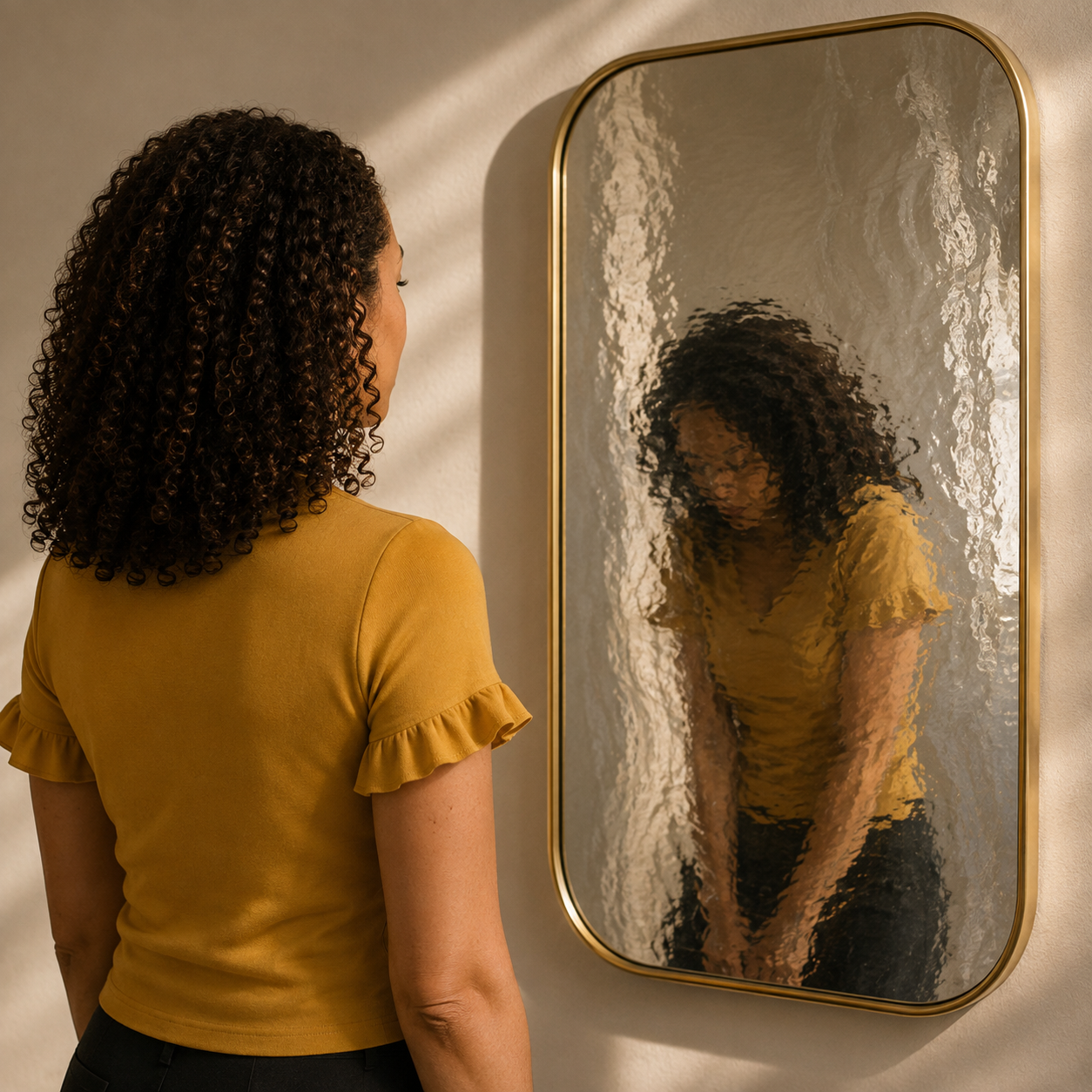
Have you ever looked at an opportunity and thought, “I’m probably not ready for that”?
Or found yourself explaining away something you’ve achieved as luck, timing, or simply being in the right place at the right time?
What interests me most about imposter syndrome is not just the self-doubt itself, but the stories we tell ourselves about what our experiences mean. Those stories are not always true, but they can become powerful enough to shape our behaviour as if they were.
Where do those stories begin?
I grew up with a mum who never really doubted that I could do difficult things. If I wanted to do something, she didn’t focus on all the reasons it might not work. She believed I would find a way.
Years later, when I was thinking about moving to another country on the other side of the world, someone close to me questioned whether I really understood how difficult it would be.
What surprised me was my own reaction. I instinctively rejected the idea that I wouldn’t succeed.
It made me realise how much my belief in my own ability to handle difficult things had been shaped by someone who had always believed I could.
And it made me wonder: how many of the stories we carry about ourselves started long before we realised we were telling them?
And sometimes the story changes
When I did eventually move to the other side of the world, successfully, I might add, I quickly became aware that people sometimes made assumptions based on my accent.
I became more conscious of how I was perceived. I found myself trying to prove that I understood certain cultural references and being careful not to reinforce assumptions about whether I belonged.
None of those assumptions changed what I was capable of.
But they changed how much energy I spent trying to prove that I belonged.
That is one of the things I find so interesting about imposter syndrome. Sometimes our ability hasn’t changed at all. What changes is the story we start believing about how other people see us.
Watch: Imposter Syndrome – Rethinking the Stories We Tell Ourselves
In the video, I explore how an experience can become an explanation, how that explanation can become a story, and how those stories can start influencing what we do, and sometimes what we don’t do.
Noticing the story doesn’t automatically make imposter syndrome disappear.
But it gives us a useful question to ask:
Is this story helping me, or holding me back?
Because we don’t have to eliminate every moment of self-doubt. Sometimes the more powerful shift is simply learning to notice the story before it starts making our decisions for us.
If you’re navigating career change, rebuilding confidence or questioning what comes next, you can explore how I can support you through coaching.
